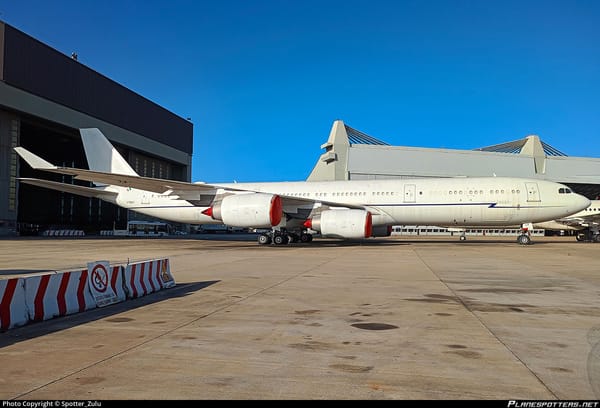
An A340, a Small Airport and No Clear Owner: The mystery of C5-AST
An Airbus A340 has sat idle at Bissau’s Osvaldo Vieira International Airport for years, its crew vanished, and its purpose is unknown. With no flights, no maintenance, and a trail that stretches from Kuwait to The Gambia, the widebody has become a symbol of aviation’s unanswered questions.
What do an Airbus A340, a West African airport, and a crew that quietly disappeared all have in common?
At first glance, not much. Yet for several years, an Airbus A340 has been sitting motionless at Osvaldo Vieira International Airport in Bissau (OXB), an airport more accustomed to narrowbodies and regional jets than long-haul widebodies. With no scheduled long-haul services, no obvious maintenance activity, and little public information about the aircraft’s status, its presence raises more questions than answers — not just about how it got there, but why it never left.
The Plane in question

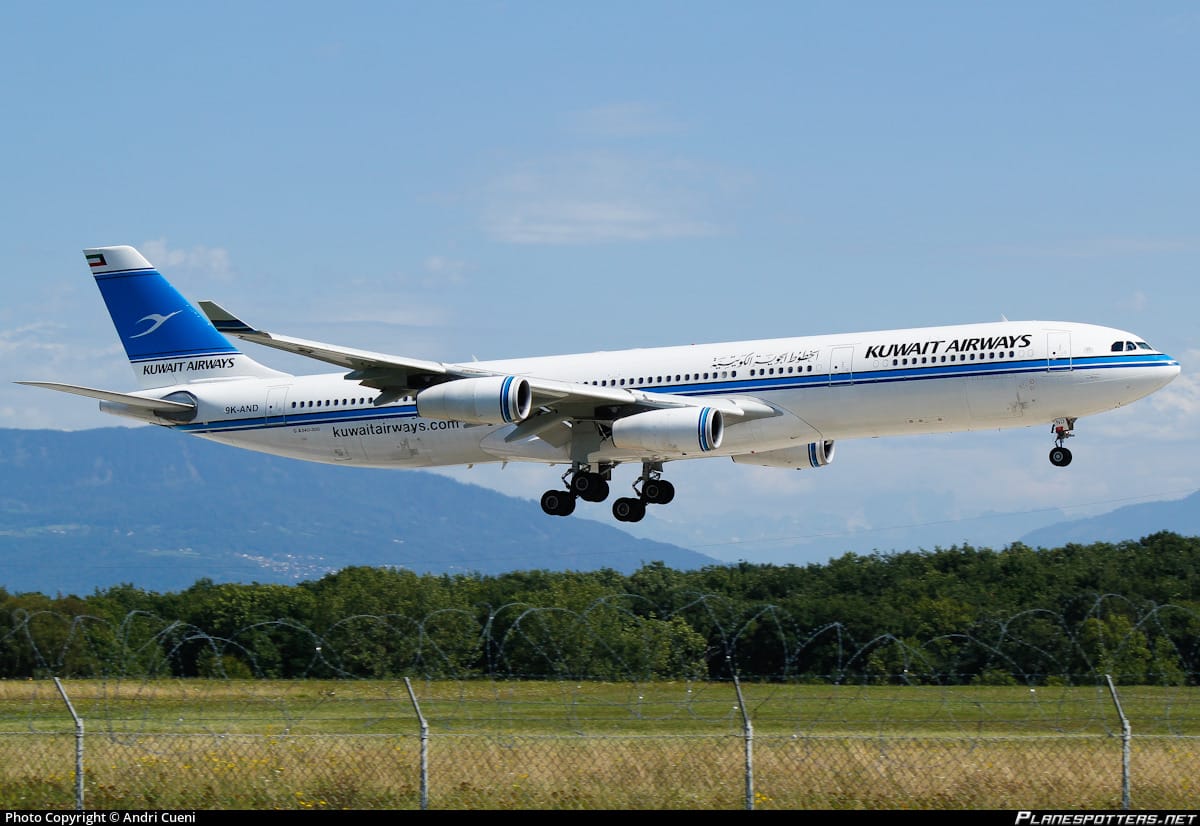
The aircraft at the centre of the story is an Airbus A340-300 (MSN 104), registered 9K-AND, which was delivered new from the factory to Kuwait Airways in July 1995. It remained in the airline’s fleet for more than two decades before being withdrawn from service in July 2017 and placed into storage at Kuwait International Airport (KWI).
After nearly three years in storage, the aircraft resurfaced on the 21st of March 2020, when it was ferried to Banjul International Airport in The Gambia. There, it was transferred to an Unknown entity and re-registered as C5-AST, a move that attracted little attention at the time and came without any public indication that the aircraft would return to commercial service.
From Banjul, the trail largely goes cold. The A340 remained in The Gambia until October 2021, when it suddenly re-entered the spotlight after an unexpected arrival at Bissau Airport, marking the beginning of the episode that would turn an otherwise overlooked airport into a hotspot of unanswered questions and conspiracy theories.
Touchdown, then Silence
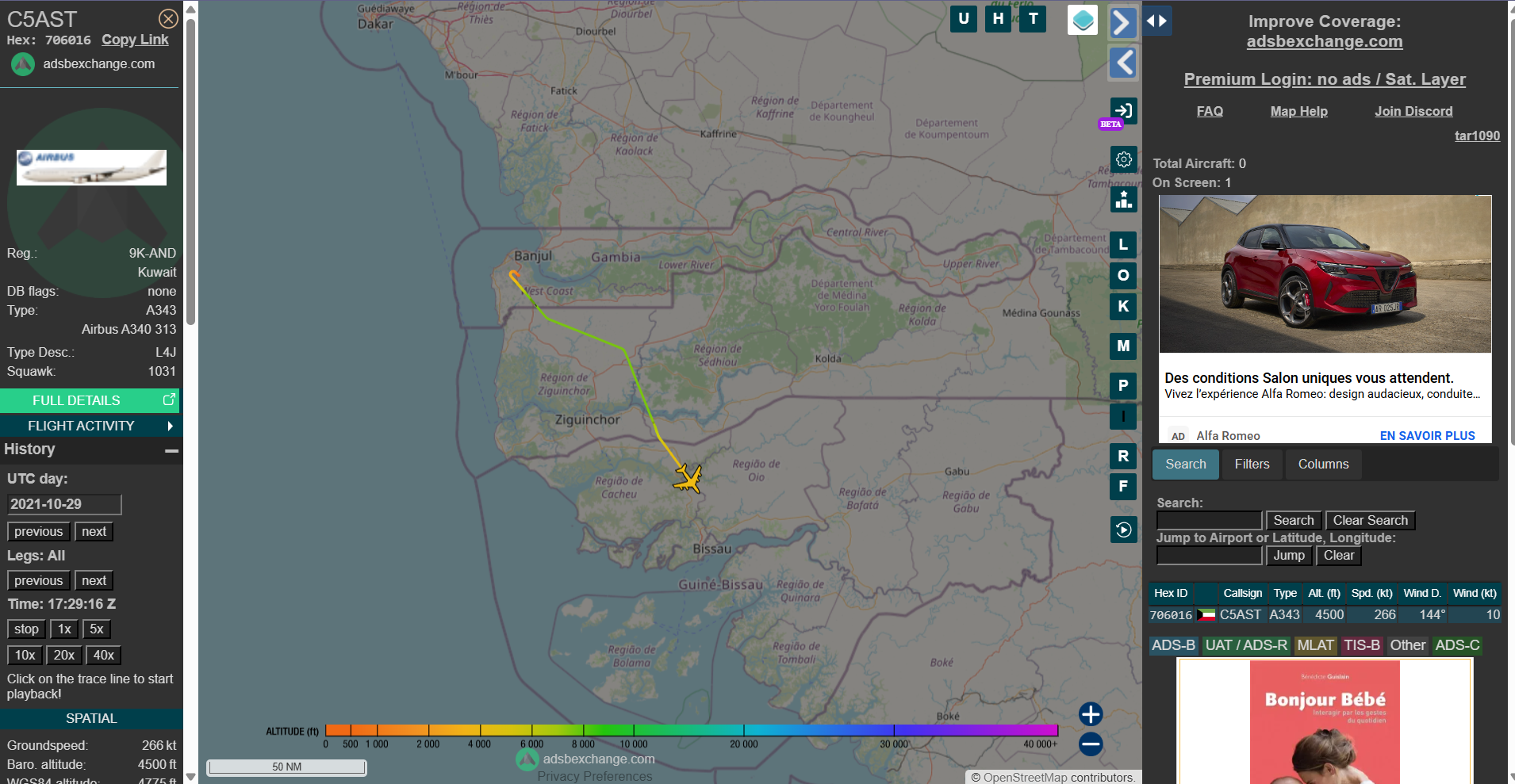
On the 29th of October 2021, the Airbus A340‑300 (C5‑AST) took off from Banjul International Airport and, after a short flight, touched down at Osvaldo Vieira International Airport (OXB) with a minimal flight crew aboard. According to local reports and aviation community accounts at the time, the crew — allegedly Turkish — fled the aircraft, and were apprehended by local authorities while attempting to leave the country.
What happened next is unclear, as subsequent follow‑ups suggest that the crew disappeared from official records, and there has been no public confirmation of charges, repatriation, or legal proceedings. Meanwhile, the aircraft itself has remained stationary and unflown, with no recorded departures, no publicly identified active operator, and no reported maintenance activity.
The presence of a four‑engine widebody at an airport geared toward narrowbodies and occasional medium widebodies only adds to the mystery, and satellite imagery and on‑site photographs have documented its isolation on the OXB apron ever since.
Not the first time

Osvaldo Vieira International Airport has a history of unusual aircraft activity. In 2008, a Gulfstream IIB business jet (Registration: N351ES) arriving from Venezuela drew attention after being linked in media reports to a major drug seizure.
While the details were not fully publicised at the time, aviation enthusiasts documented the jet’s extended stay on the apron, noting the unusual circumstances for a small airport primarily serving regional traffic. The story of the 2008 Gulfstream seizure took a dramatic turn when Media sources suggested that several airport personnel and members of ATC were questioned in connection with the incident, while the drugs aboard — reported at roughly 600 kg — disappeared from public view during the subsequent investigation.
Local press and anecdotal accounts also described high-level interest from senior officials, including a General who was allegedly killed whilst trying to seize the aircraft for himself - though this account remains unverified. The episode illustrated early on that aircraft in Bissau could linger for prolonged periods under unusual circumstances, whether due to legal, operational, or enforcement-related complications.
Although entirely separate from the A340 case, the 2008 Gulfstream episode provides context for why aviation observers quickly noticed the widebody’s long-term presence: OXB has previously seen aircraft remain stationary under circumstances that defy typical commercial expectations.

In addition to the earlier 2008 incident, the airport was the scene of another major drug trafficking bust in September 2024, when authorities seized more than 2.6 tonnes of cocaine aboard a Gulfstream IV (Registration XA-SBT - allegedly linked to the Sinaloa Cartel) that had arrived from Venezuela (again). The operation, referred to locally as “Operation Landing,” resulted in the arrest of five crew members and was carried out by Guinea‑Bissau’s Judicial Police in cooperation with the U.S. Drug Enforcement Administration (DEA), the Colombian Air Force, the Portuguese Polícia Judiciária (PJ), and assistance from AFRIPOL, INTERPOL and the United Nations Office on Drugs and Crime (UNODC).
The Gambia Connection
Beyond individual incidents, The Gambia has occasionally appeared in aviation circles as a hub for unusual or complex aircraft operations. Its small registry, relatively limited oversight, and strategic location in West Africa have made it a convenient stopover or temporary home for aircraft in legal or logistical limbo, including widebodies and business jets.
While there is no public evidence connecting the Airbus A340 at OXB to illicit activity, the country’s aviation environment provides context for how an aircraft might remain stationary for years. In essence, The Gambia has, at times, served as a “pause point” in the global aviation network — a place where the rules of commercial logic bend without breaking formal regulations.
Conclusion and Unanswered Questions
Five years on, the Airbus A340 remains a silent fixture at Osvaldo Vieira International Airport, a striking presence in a facility better suited to narrowbodies and regional jets. Its long-term stay continues to intrigue aviation enthusiasts and raises practical questions: why did the plane land there in the first place, what was the purpose of that flight, why did the crew simply vanish, and — perhaps most importantly — what will eventually become of a four-engine giant stranded in a small West African airport?
Meanwhile, OXB is undergoing a major refurbishment, including runway and apron upgrades, which complicates the situation even further. The A340 has now become both a symbol of aviation oddities and a logistical challenge, stranded amid an airport modernisation project that was never designed with a parked widebody in mind.
Ultimately, the story of the A340 at Bissau remains unresolved, a puzzle of missing paperwork, vanished crew, and years of inactivity. For spotters, it is a rare spectacle; for aviation authorities, it is an ongoing challenge; and for the wider world, it is a reminder that sometimes the skies are less predictable than the maps we draw.