The curious case of I-TALY. How politics turned a state aircraft into a stranded asset
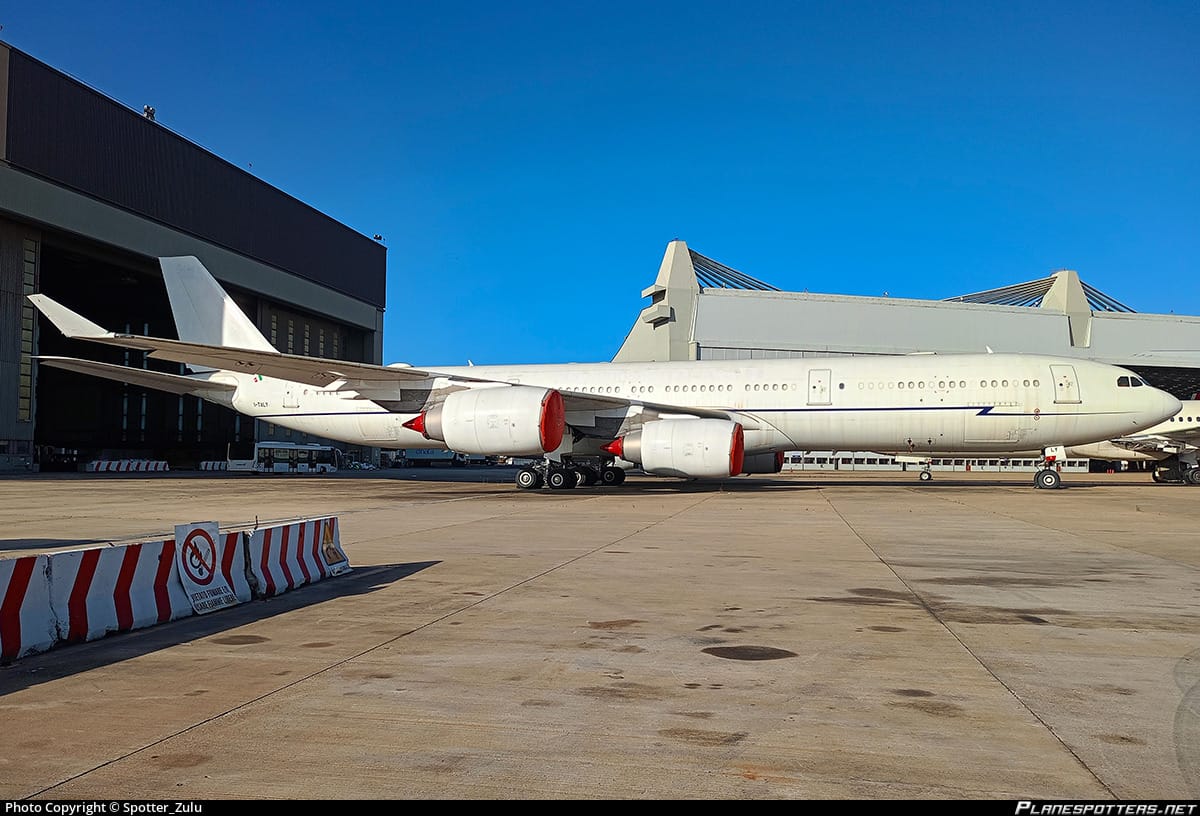
Few aircraft have had a life as unusual as Italy’s Airbus A340‑500. Leased through a complex workaround, flown only 88 times, left grounded for years, and eventually sold for a symbolic €1, it is less a story about an aeroplane than a story about how aviation networks, politics, and procurement decisions intersect—and sometimes fail spectacularly!
The Context: Why I-TALY existed
To better understand the story, we need to rewind the clock back to 2014—a simpler time when smartphones were still new, everyone thought hoverboards were imminent, and the Italian Ministry of Defence was desperately searching for a long-range aircraft capable of flying nonstop to Asia and South America. This is because the Air Force’s ACJ319s couldn’t cover these distances without technical stops, creating a genuine gap in Italy’s state aviation capability.
At the same time, Etihad Airways had just acquired a 49% stake in Alitalia and had an A340‑500 coming out of service—an immediately available, highly capable solution that seemed convenient for all parties.
It’s worth noting that the A340‑500 was always intended as a temporary measure while the government assessed longer-term options, which explains why an aircraft already being phased out was leased and why no meaningful future-proofing was undertaken.
The Leasing Structure
Italy’s government couldn’t lease directly from Etihad, a non‑EU company, so a workaround was required to allow the government to legally lease the plane. The solution involved two separate contracts that together enabled the Ministry of Defence to operate the A340‑500 for state missions.
Step 1: Alitalia ↔ Etihad (2016)
Alitalia first signed a lease agreement with Etihad, the aircraft’s owner at the time. This contract covered:
- The primary lease of the A340‑500
- Heavy and line maintenance
- Ground handling
- Pilot training and type rating support
The total monthly cost for Alitalia was roughly €460,000, partially reimbursed by the Ministry of Defence to offset operational expenses.
Step 2: Alitalia ↔ Ministry of Defence (2016)
The Ministry then entered into a “sub-lease” arrangement with Alitalia. Under this contract, Alitalia provided:
- The aircraft for official state missions
- Full operational support, including scheduled and unscheduled maintenance
- Cabin services and onboard entertainment
- Crew training and qualification
The sub-lease was valued at €168 million over eight years, covering the aircraft and the full ecosystem required to operate it consistently and safely. In theory, the Italian government could have sourced a second-hand aircraft from an EU-based operator, but the existing investment by Etihad in Alitalia created a strong incentive to structure the lease through the carrier, aligning political and strategic interests even if it added layers of contractual complexity.
Cancellation and Legal Battles
Dubbed “Renzi Force One,” the A340‑500’s career was short-lived. By mid‑2018, the incoming Italian government reassessed the cost and structure of the dual-contract arrangement and chose to terminate the program entirely. What followed was a chain of events that compounded the aircraft’s operational and financial limbo.
- Program shutdown: The aircraft had completed only 88 flights before cancellation, leaving it largely underutilised.
- Attempted return: Efforts to return the plane to Etihad were complicated by the dual-contract structure, delays, and differing interpretations of the lease terms.
- Long-term storage: For the next five years, the A340‑500 sat at Rome Fiumicino, exposed to natural wear and slowly losing residual value.
- Alitalia's Demise: By October 2021, Alitalia’s long-running financial struggles finally forced the airline to cease operations, giving way to ITA Airways as a leaner, state-backed successor. I‑TALY, already grounded and outside commercial service, was not transferred to ITA and remained under Alitalia’s administration.
- Legal disputes: Etihad and Alitalia’s commissioners entered a protracted legal confrontation over the termination of the lease agreements. Questions over payment obligations, maintenance responsibilities, and contractual liabilities delayed any resolution.
The Final Twist
On 17 May 2023, I‑TALY was sold for the symbolic price of €1 as part of a settlement between Etihad and Alitalia’s liquidators. Complete with its four Rolls‑Royce Trent 500 engines, manuals, logbooks, and onboard equipment, the aircraft officially entered Italy’s civil aviation registry in April 2024.
Yet, with no realistic path back to service, it is now slated for dismantling, with high-demand components sold to operators still flying the -500 variant and the remainder scrapped. For a plane designed to cross continents nonstop, its final journey ended just a few hundred meters from where it began, a literal and symbolic grounding of both the aircraft and the airline that once operated it.
Final Takeaways
I‑TALY’s story is more than an aviation curiosity—it is a case study in how fleet decisions, political ambitions, and airline network fragility intersect. The aircraft was a temporary solution, constrained by regulatory hurdles, financial entanglements, and a partner airline (Alitalia) unable to sustain long-haul operations. Its rapid grounding, prolonged storage, and eventual dismantling reflect a systemic failure: politics and expedience drove decisions that outpaced operational reality.
More broadly, the saga underscores that aviation networks are only as robust as the strategic planning behind them. Even highly capable aircraft cannot substitute for long-term, well-aligned fleet strategy and governance, and I‑TALY serves as a cautionary tale for both state and commercial operators navigating the intersection of prestige, politics, and operational necessity.